
Keywords
concurrent chemoradiotherapy resistance
FOXQ1
signaling pathway
Categories
How to Cite
Abstract
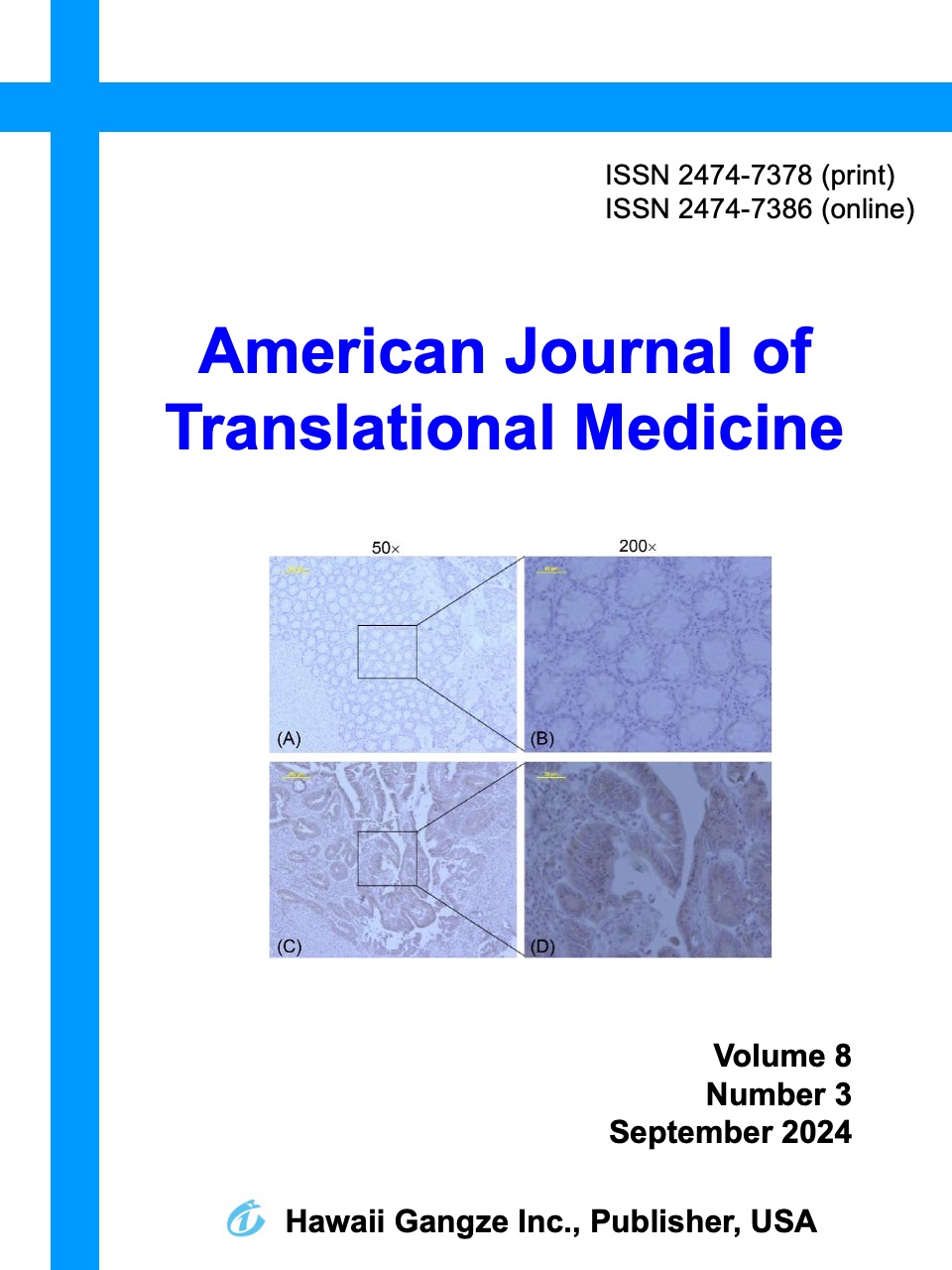
Abnormally high expression of Forkhead box Q1 gene (FOXQ1) has been implicated in colorectal cancer (CRC) development. However, its role in acquiring chemoradiotherapy resistance in tumors remains unclear. This study investigated the role of FOXQ1 in chemoradiotherapy resistance in CRC and the underlying mechanism. Clinical specimens, FOXQ1 cell functional recovery experiments, and immunohistochemistry (IHC) were used to investigate the association between FOXQ1 expression in CRC tissue samples and clinical pathogenic traits, neoadjuvant chemoradiotherapy efficacy, and patient survival prognosis. Additionally, HCT116/CRR CRC cells with FOXQ1 knocked down by lentivirus transfection were used to investigate its effects on cell proliferation, invasion, migration, and apoptosis, and on clone formation and cell cycling. High FOXQ1 expression correlated with a high tumor regression grade score. The differences in carcinoembryonic antigen levels, tumor shrinkage, TNM (tumor, node, metastasis) stage reduction, and RECIST (Response Evaluation Criteria in Solid Tumors) grading were statistically insignificant. Moreover, patients with elevated FOXQ1 expression exhibited significantly shortened overall and disease-free survival. FOXQ1 mRNA and protein levels were also higher in HCT116/CRR CRC cells than in HCT116 wild-type cells. FOXQ1 knockdown significantly inhibited the proliferation, clone formation, migration, and invasion of shFOXQ1 cells, while increasing the apoptosis rate, compared with those of shNC-treated cells (negative control group). The proportion of G0/G1 phase cells was higher, whereas the proportion of G2/M phase cells was significantly lower in the shFOXQ1 group than in the shNC group, with a marked increase in early apoptosis. In the shFOXQ1 group, the relative expression of Bax, cleaved-caspase 3, and phosphorylated and cleaved-poly ADP-ribose polymerase (PARP) increased compared with that in the shNC group. In contrast, the relative expression of Bcl-2, caspase 3, total PARP, c-Myc, and cyclin D1 decreased compared with that in the shNC group. Bioinformatic analysis further revealed a close association between the AKT protein and FOXQ1. Collectively, these findings indicate that poor tumor differentiation, resistance to neoadjuvant chemoradiotherapy, and poor survival prognosis correlate with high FOXQ1 expression in CRC tissues. Mechanistically, FOXQ1 might activate the AKT signaling pathway and inhibit apoptosis while promoting the proliferation, migration, and invasion of CRC cells, rendering them resistant to concomitant chemoradio-therapy.